
Process
Process
How We Deliver Institutional & Experiential Installations
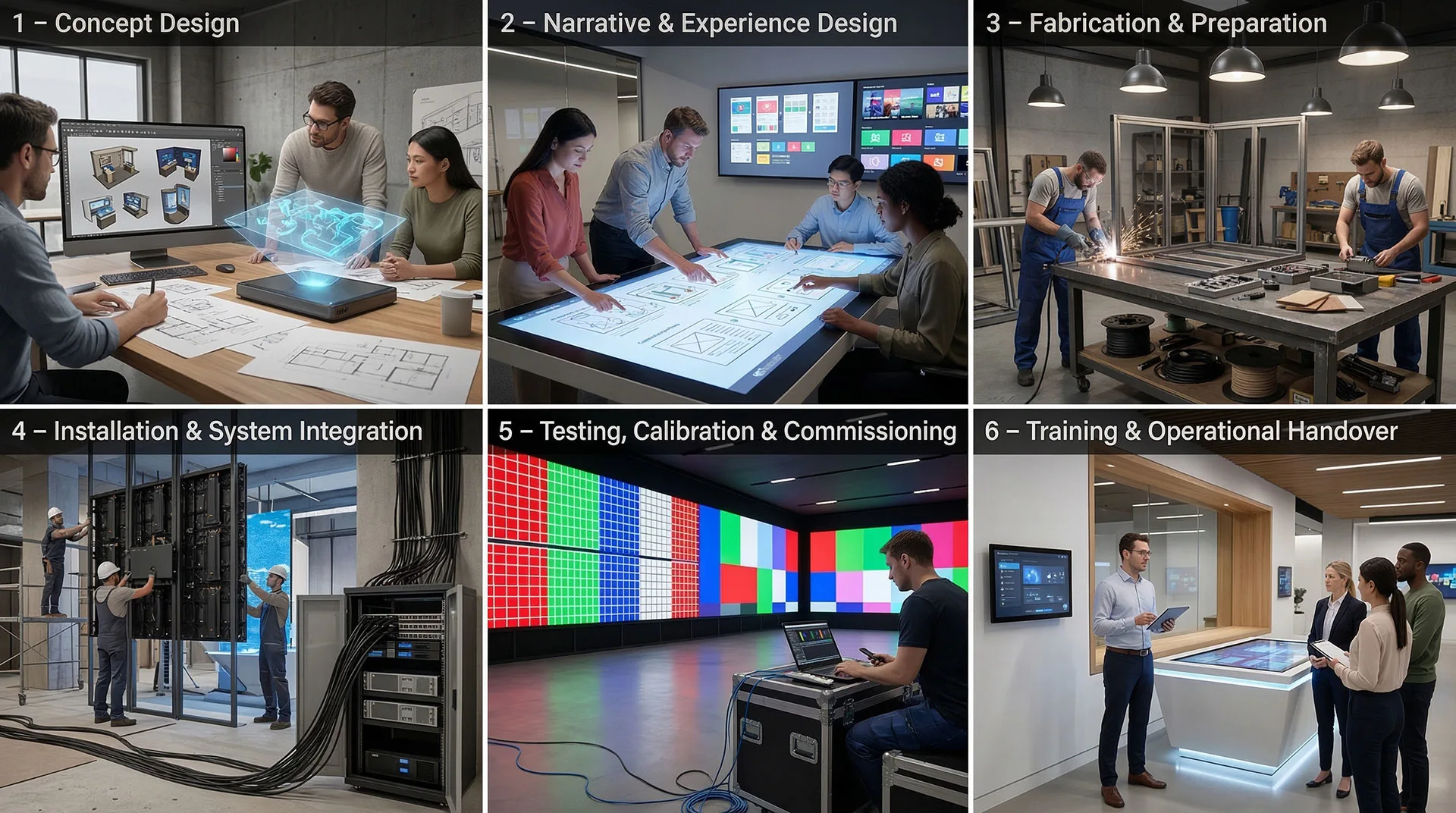
Every installation begins with understanding the spatial environment, narrative objectives and audience interaction requirements. Our process integrates storytelling, engineering, fabrication and system deployment to create interactive exhibits and immersive environments designed for long-term institutional use.
From early concept development to final commissioning, each stage ensures that technology, architecture and visitor engagement work together as a unified experiential system.
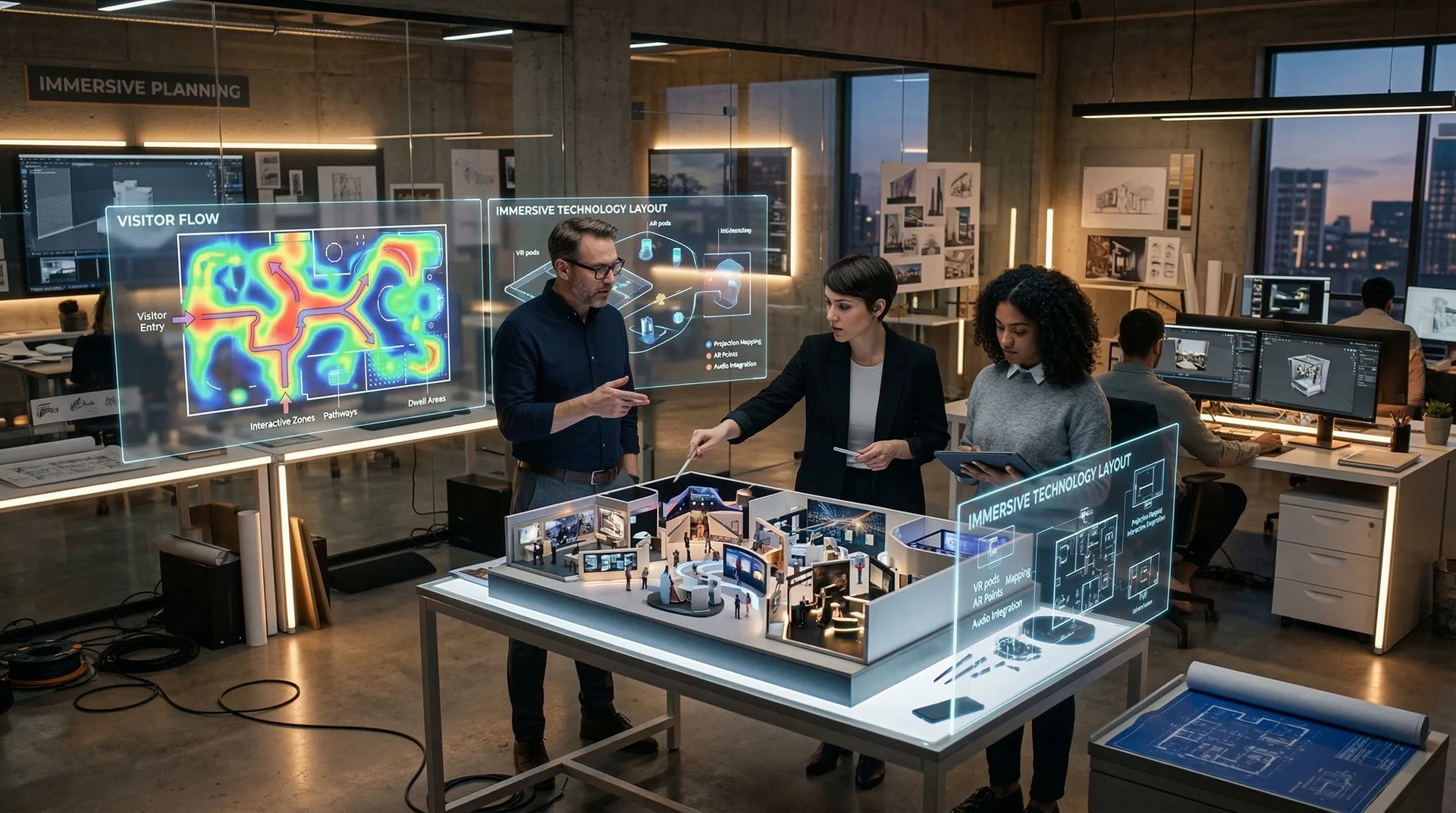
Planning & Spatial Concept
Before development begins, we analyse the physical environment, project objectives and visitor journey requirements. This stage establishes the conceptual foundation for the installation, ensuring that the experience aligns with the architectural space and narrative goals.
Activities typically include:
- Understanding institutional or project objectives
- Mapping visitor flow and engagement zones
- Identifying suitable interactive or immersive formats
- Defining technology requirements and system scale
- Evaluating architectural integration constraints
The outcome is a structured concept that balances storytelling, spatial design and technical feasibility.
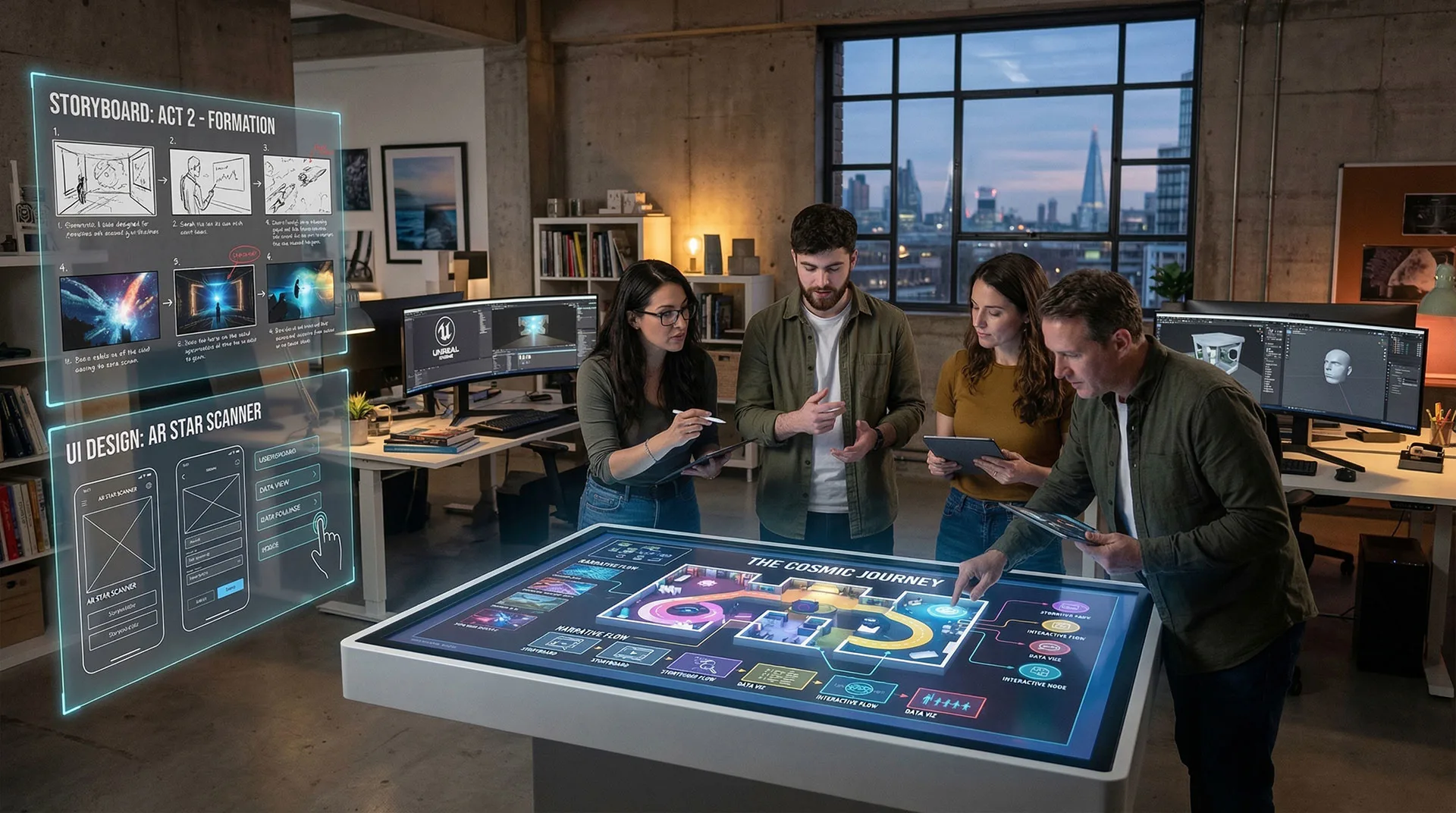
Narrative & Experience Design
Once the concept is defined, the project moves into experience design. This stage focuses on translating ideas into structured visitor interactions, multimedia narratives and spatial storytelling frameworks.
Design considerations include:
- Visitor interaction models and engagement logic
- Story structure and thematic sequencing
- Multimedia content planning
- Exhibit interface design
- Visual communication and spatial graphics
The goal is to ensure that each installation communicates information effectively while maintaining intuitive interaction for visitors.
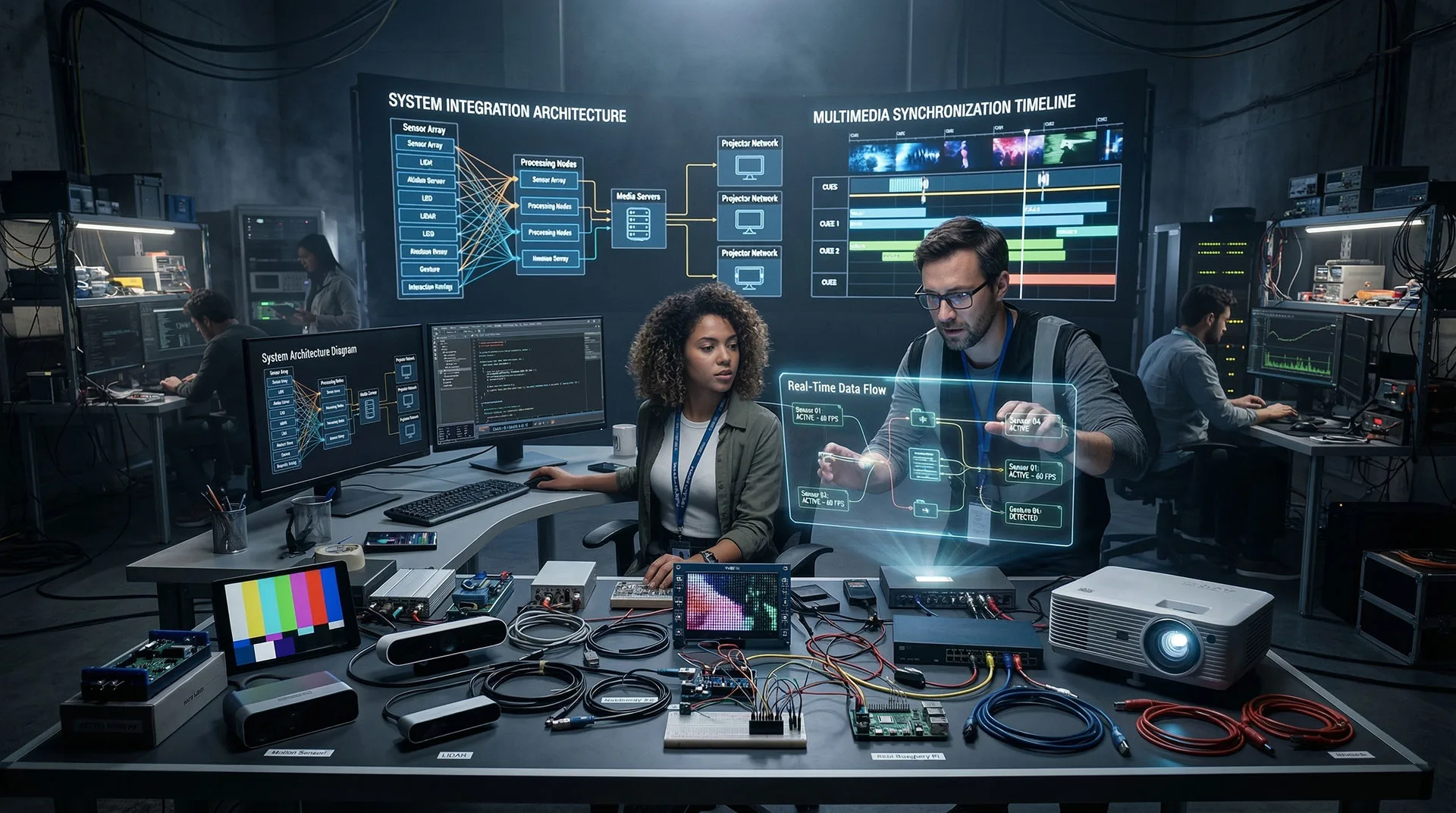
System Engineering & Technical Development
With the narrative structure defined, the installation is engineered as a complete system integrating hardware, software and mechanical components.
This phase typically includes:
- Interactive software development
- Multimedia content production
- Sensor systems and interaction logic
- Display and projection system design
- Hardware engineering and system integration
All components are designed as part of a unified architecture to ensure reliability and synchronized operation.
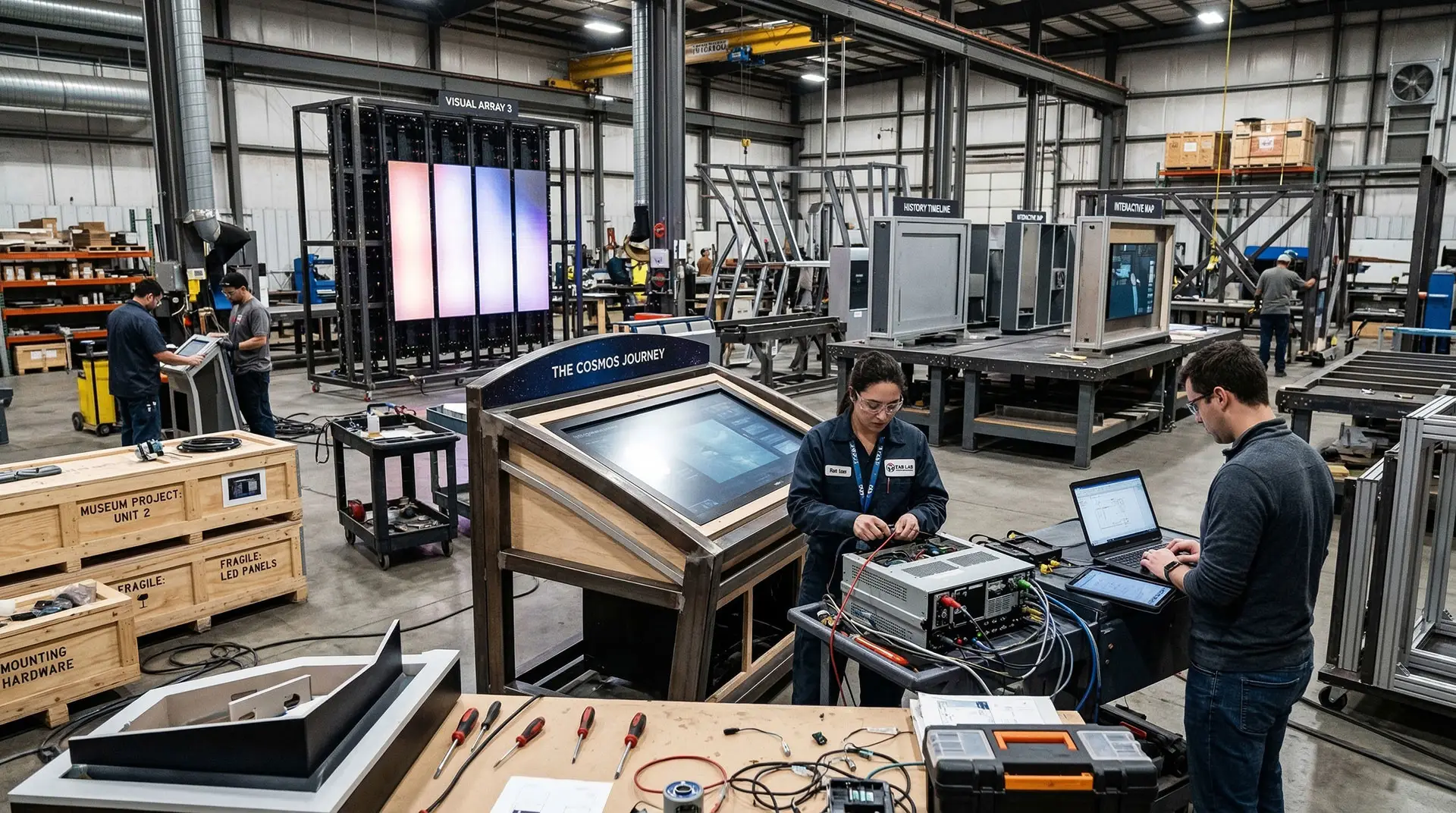
Fabrication & Installation Preparation
Before deployment, the installation components are fabricated and prepared for integration within the final environment. Structural elements, enclosures and mounting systems are engineered to align with the architectural context.
This stage includes:
- Fabrication of exhibit structures and enclosures
- Display and hardware assembly
- Control system integration
- Pre-installation system testing
- Logistics planning for on-site deployment
The objective is to ensure that all components are ready for efficient and accurate installation.
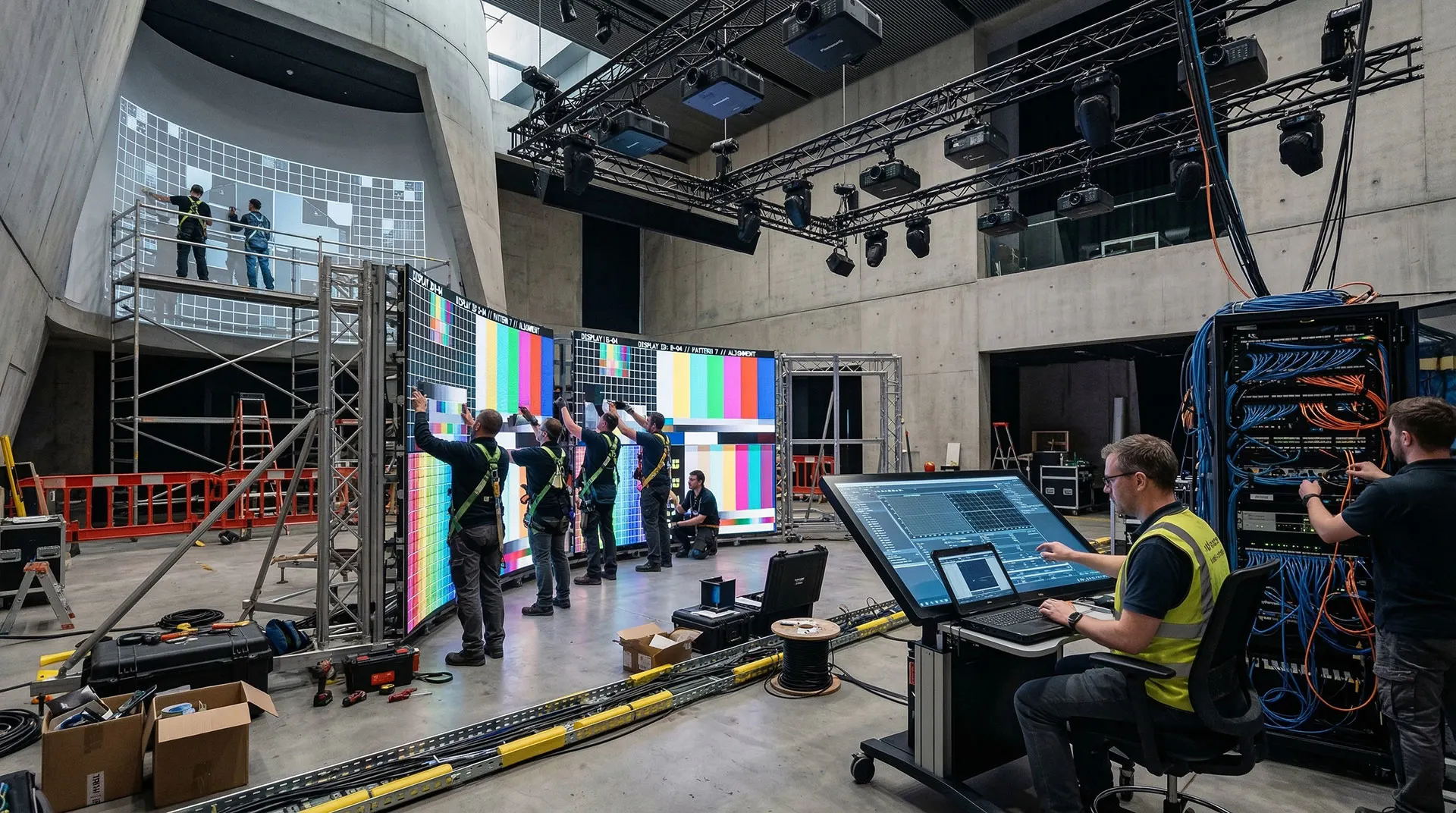
Installation & System Integration
During installation, the system is integrated into the physical environment. Hardware, displays, projection systems and control infrastructure are installed and connected to form a fully operational platform.
Activities include:
- On-site installation of hardware and structures
- System wiring and control network setup
- Display calibration and alignment
- Projection mapping and visual synchronization
- Integration with existing infrastructure when required
This stage ensures that the installation is physically and technically integrated into the space.
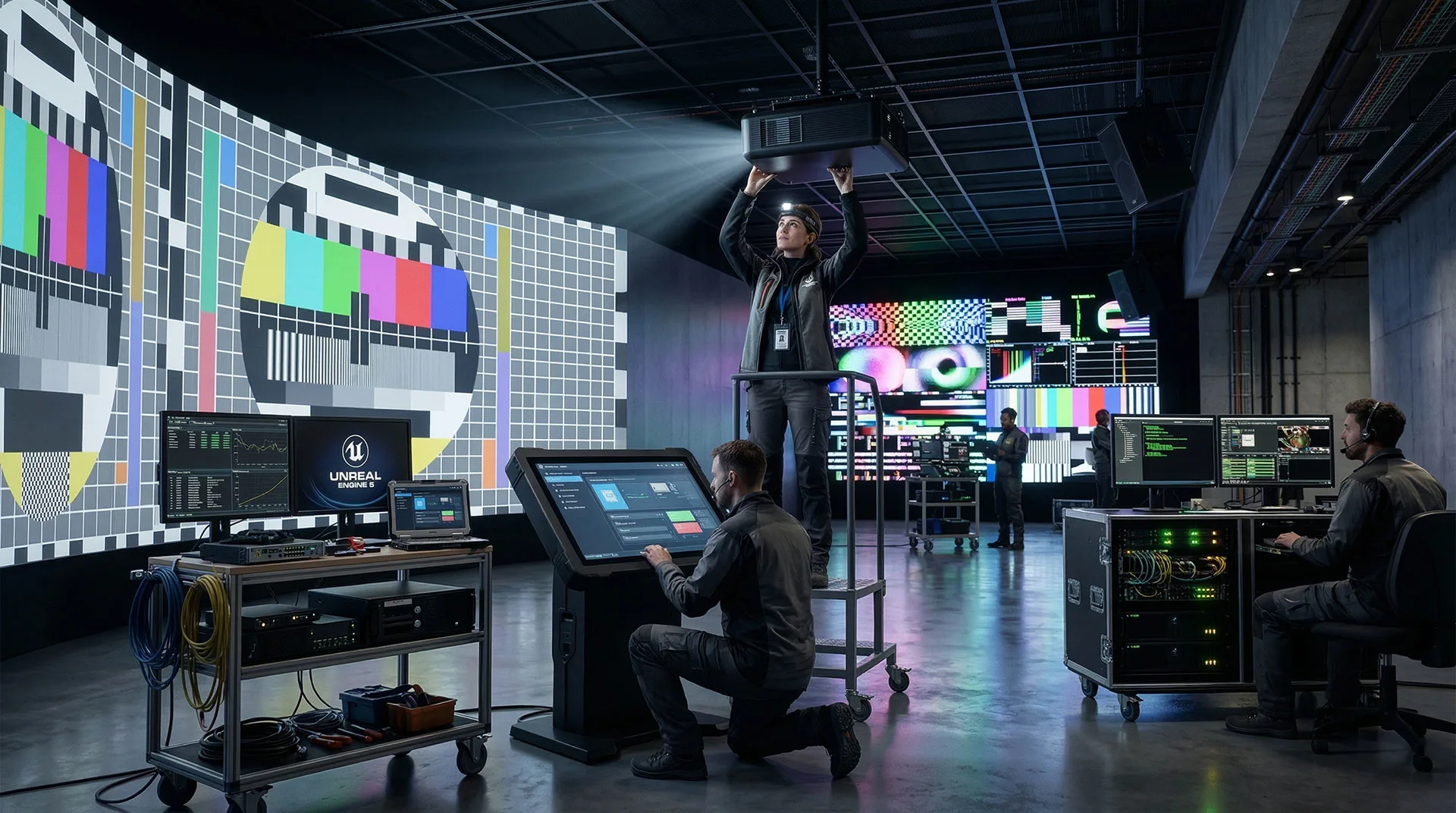
Testing, Calibration & Commissioning
Once installed, the system undergoes testing and calibration to ensure reliable performance and seamless interaction.
This stage includes:
- System diagnostics and operational testing
- Interaction calibration and response tuning
- Visual and audio synchronization
- Performance validation under real visitor conditions
- Final commissioning of the installation
The system is then prepared for operational deployment.
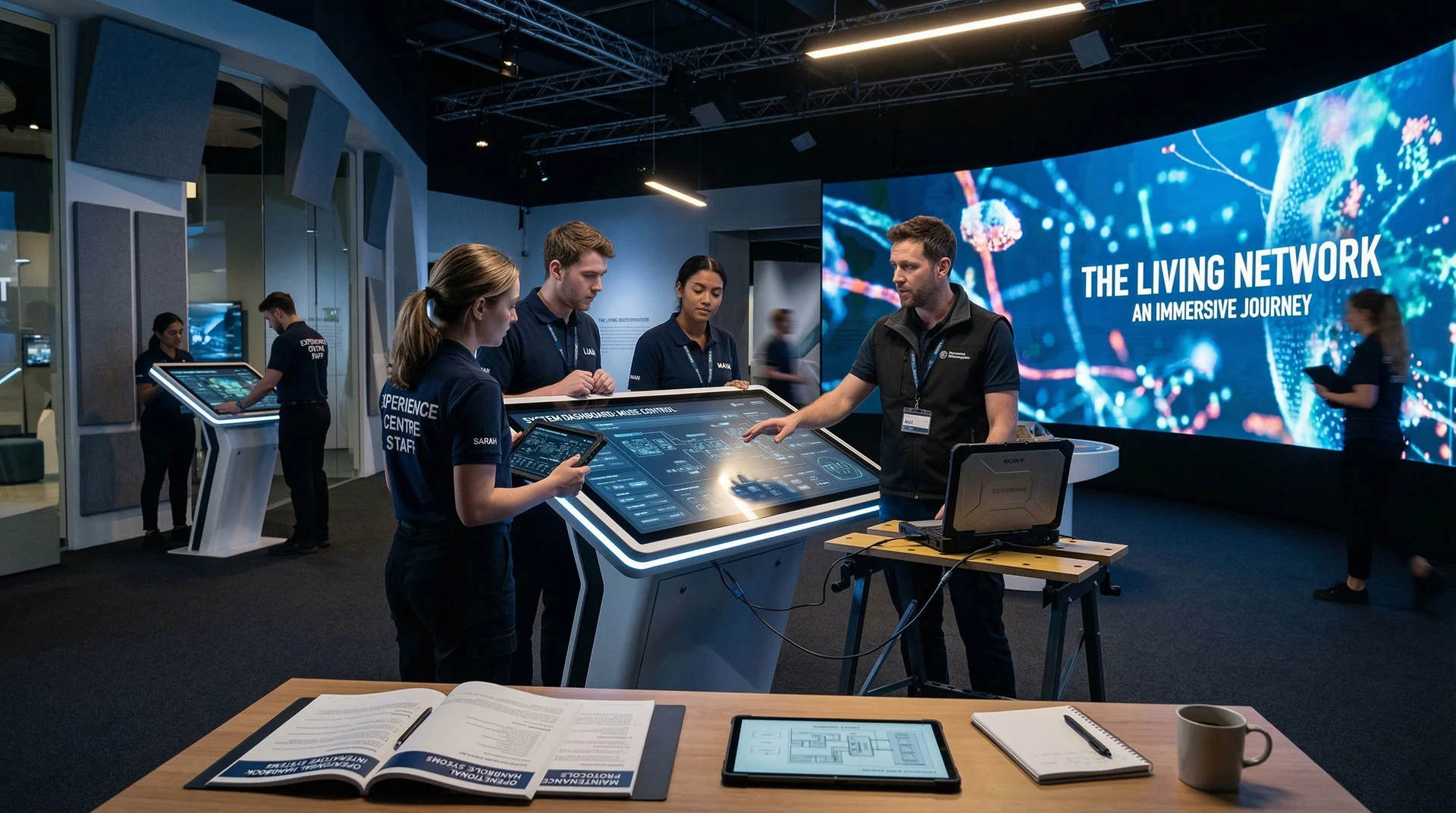
Training & Operational Handover
After commissioning, operational teams are trained to manage and maintain the installation. Documentation and system guidance are provided to support long-term reliability.
This stage includes:
- Operational training for staff
- System documentation and maintenance guidance
- Content management instructions
- Technical support protocols
This ensures the installation continues to function effectively over its lifecycle.
Engineered for Long-Term Deployment
Interactive exhibits and immersive environments must perform reliably in high-footfall public environments. Our process is designed to ensure durability, scalability and seamless integration within institutional infrastructure, allowing installations to evolve while maintaining long-term operational stability.